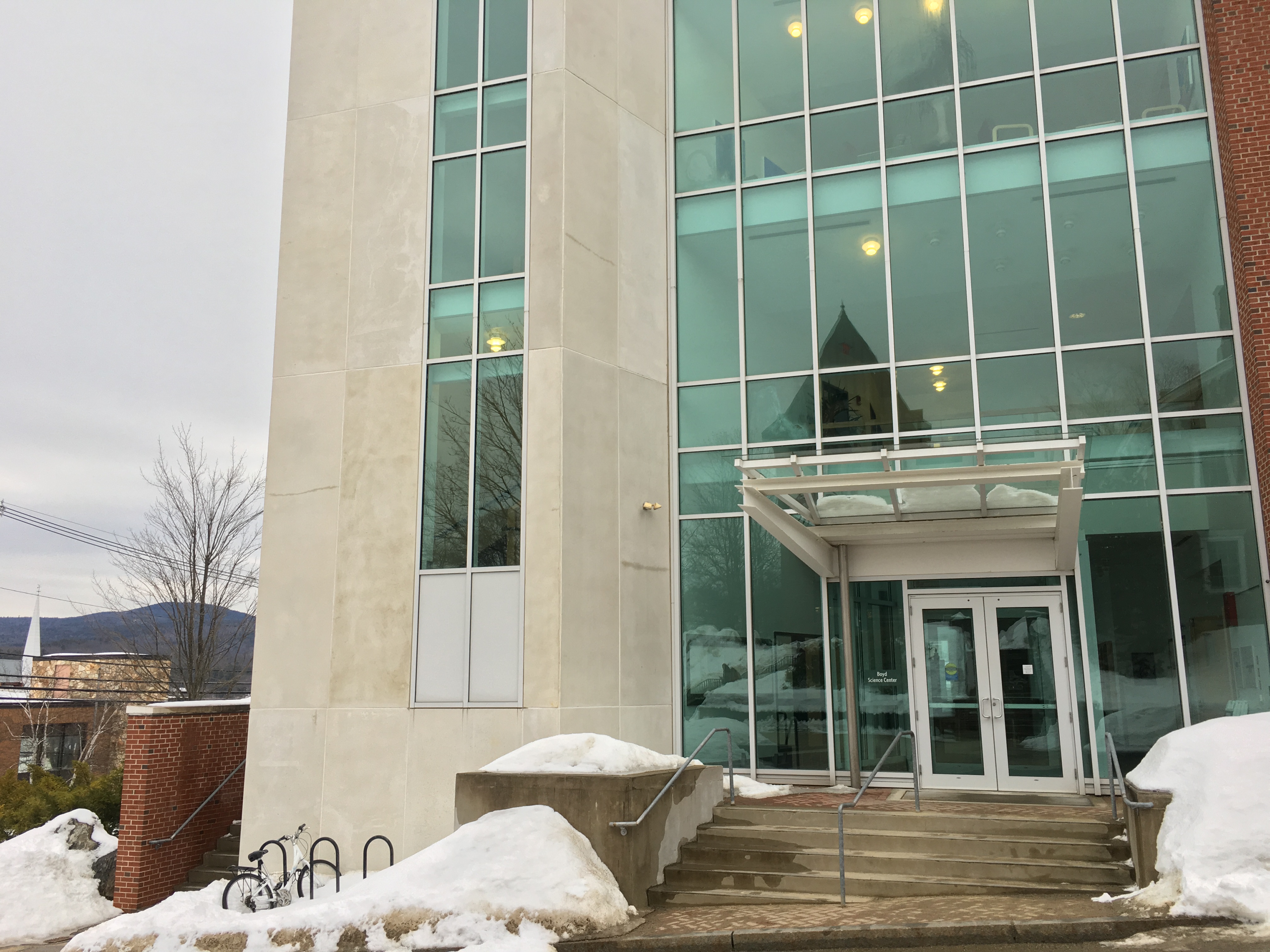
For those or who have a tough time understanding, “What is the importance of Biology?” the use or edibility of what grows in our forest oftentimes connects non-biolists with biologists and sheds light on why biologists do they work they do, “Dr. Thomas Stoughton explains something during an interview about his work and current research in Boyd Hall. This is exactly what led me to take Good Mushroom, Bad Mushroom with him Fall ‘17. I had been interested in mushrooms as medicine previously, and in the course was able to identify medicinal mushrooms I found in my backyard. Aside from being able to connect with people, Stoughton says, “I think when you’re talking about medicine, biodiversity with multiple options, chemical and biochemical processes is an important thing to understand.”
Contrary to outdated belief, the student of mushrooms is not titled Botany, it’s Mycology. Mushrooms are more closely related to animals than plants; however, Dr. Stoughton got interested in mushrooms because he’s, “always been looking at the ground – plants, small organisms and been interested in the interactions among organisms outside.” Receiving PhD in Botany from Claremont Graduate University, the Mycology course he taught is the most obvious interdisciplinarity Stoughton faces currently in his work.
Before getting his PhD, Stoughton got his undergraduate degree in Environmental Science. His specific areas of research include phylogenetics and biodiversity estimation. Biodiversity estimation is using phylogeny and morphology to understand how many species there are in a different place and how they interact and what their function they serves in an ecosystem setting. He alludes his undergraduate degree to giving him the application tools he uses in his everyday work as mainly a researcher and botanist. Other interdisciplinary work with scholars outside of his field include research with geologists and geomorphologists because the plants he studies grow on different rocks. He also explained, “I had a soil scientist on my committee and I used him to understand what was going on chemically in the soil.”
Stoughton personally wishes to break into science communication and science education. He stressed the notion that in order to be good at what you do, you need to be able to connect with the public. As far as courses and skills Stoughton believes students should have that a biology degree doesn’t offer are courses in, he believes that it all depends on the kind of work you want to be doing. If you want to be doing more field work, take more observation classes.
Stoughton told me he loves to be outside. The notion that if something bad were to happen, he could make an attempt at survival motivates Stoughton to do the academic work he does. he “could go out into the forest and maybe survive or at least if something bad were to happen I might be able to piece something together to survive in an emergency.responded, “ I spend a lot of time foraging or hiking and plays a lot with plant ID. “I basically am doing what I really really enjoy and that’s why I do it in my free time.” Really, I think that’s the goal here – to study something we want to keep.


Leave a Reply